This case study is due for a visual update.
This case study is due for an update. Go back to personal website.
Reducing Dropoffs for a Dental-Care Startup
by 4%
Reducing Dropoffs for a Dental-Care Startup
by 4%
Dezy (formerly Smiles.ai) is a dental care startup that serves 300,000+ users through its chain of dental clinics across India. In late 2022, Dezy raised its Series A to solve for a better end-to-end dental care experience in India.
As part of a larger brand revamp, I helped redesign Dezy’s website to improve new user acquisition, leading to a 5x increase in new users signing up.
Dezy (formerly Smiles.ai) is a dental care startup that serves 300,000+ users through its chain of dental clinics across India. In late 2022, Dezy raised its Series A to solve for a better end-to-end dental care experience in India.
As part of a larger brand revamp, I helped redesign Dezy’s website to improve new user acquisition, leading to a 5x increase in new users signing up.
MY RESPONSIBILITIES
Interaction Design, UX Strategy, Prototyping, User Research, Scoping
PLATFORM
Website
TIMELINE
Dec 2022 - Apr 2023
IN A HURRY?
PROTOTYPE
Play with the mid-fid prototype
CONTEXT
Dental care in India is not easy
Dental care in India is not easy
Dezy is an Indian dental care startup that has a chain of dental clinics. It aims to be much more than a traditional dental clinic brand by focussing on technology, transparency and a better patient experience.
Dental care in India is not an easy market to break into. Add the anxiety that people have when they think about going to a dentist, to a highly-fragmented market with low engagement and high out-of-pocket treatment costs, and you are looking at a steep slope to climb. Despite this, Dezy had found a solid footing.
Dezy’s rebranding that happened before our project began was its first step in differentiating itself in a market where brand-building was not usually common. The second step was the website re-design. With it, Dezy wanted to overhaul its current end-to-end experience which would ultimately enable its main product - providing dental treatments in its state-of-the-art clinics.
Dezy is an Indian dental care startup that has a chain of dental clinics. It aims to be much more than a traditional dental clinic brand by focussing on technology, transparency and a better patient experience.
Dental care in India is not an easy market to break into. Add the anxiety that people have when they think about going to a dentist, to a highly-fragmented market with low engagement and high out-of-pocket treatment costs, and you are looking at a steep slope to climb. Despite this, Dezy had found a solid footing.
Dezy’s rebranding that happened before our project began was its first step in differentiating itself in a market where brand-building was not usually common. The second step was the website re-design. With it, Dezy wanted to overhaul its current end-to-end experience which would ultimately enable its main product - providing dental treatments in its state-of-the-art clinics.
THE PROBLEM
A leaky funnel
A leaky funnel
One of Dezy’s main differentiator was its willingness to offer a Free Consultation. That was the crux of its new user acquisition strategy.
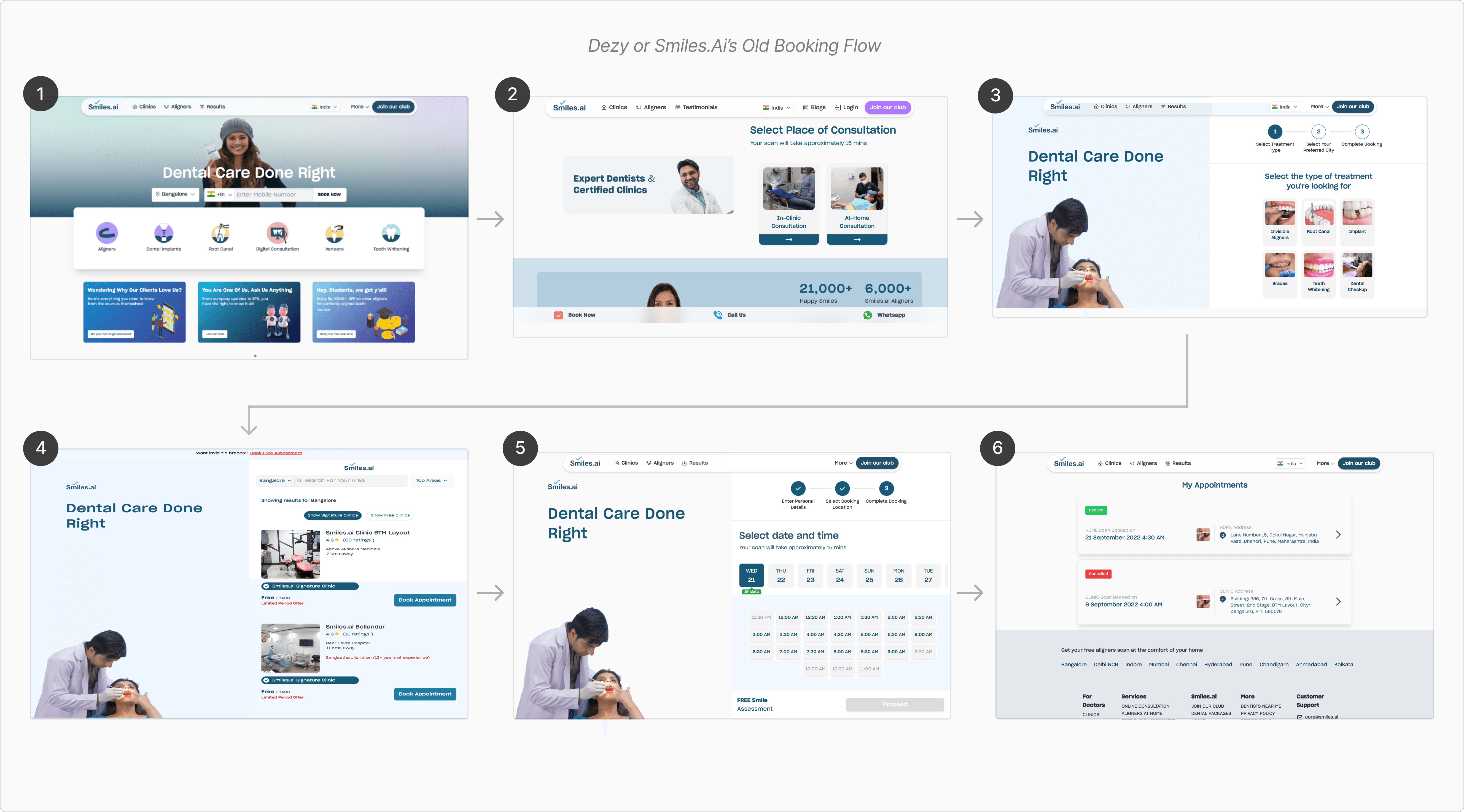
This is how the old Booking Flow which users used to book a free consultation, played out:
Enter your number and select your city to start booking a free consultation
Select place of consultation
Choose a treatment for which you want a free consultation
Select clinic or add your address details (if you selected at-home consultation)
Choose an available date and time
Finish booking
One of Dezy’s main differentiator was its willingness to offer a Free Consultation. That was the crux of its new user acquisition strategy.
This is how the old Booking Flow which users used to book a free consultation, played out:
Enter your number and select your city to start booking a free consultation
Select place of consultation
Choose a treatment for which you want a free consultation
Select clinic or add your address details (if you selected at-home consultation)
Choose an available date and time
Finish booking
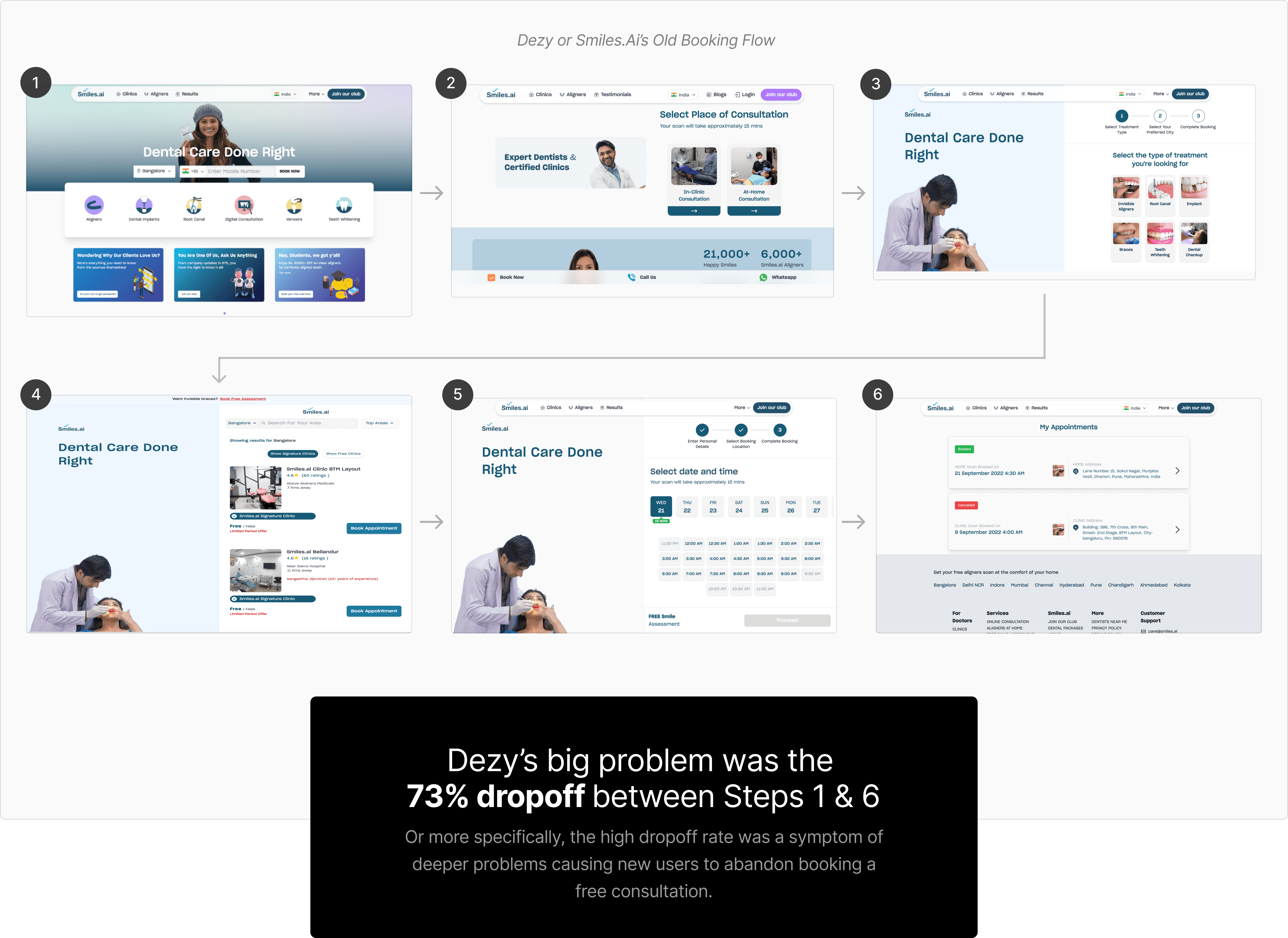
Dezy’s big problem was the
73% dropoff between Steps 1 & 6
Or more specifically, the high dropoff rate was a symptom of deeper problems causing new users to abandon booking a free consultation.
MY ROLE
Interaction Design + UX Strategy
Interaction Design + UX Strategy
Our team was made up of two interaction designers, a product manager and a visual designer. I led the redesign for new user acquisition which was the first stage of the user journey. I worked with my PM, Anudeep, on refining and defining the scope with different priority levels. I also worked closely with our visual designer on polish and on making sure that the final screens and the new design language were in sync.
Our team was made up of two interaction designers, a product manager and a visual designer. I led the redesign for new user acquisition which was the first stage of the user journey. I worked with my PM, Anudeep, on refining and defining the scope with different priority levels. I also worked closely with our visual designer on polish and on making sure that the final screens and the new design language were in sync.
TL;DR
Our redesign led to a 5x increase in leads in the first month after the new flow was rolled out
Our redesign led to a 5x increase in leads in the first month after the new flow was rolled out
We also managed to save Dezy some operating expenses by increasing their self-booking percentage from 5% to 25%, thus reducing its reliance on agents to call and manually book consultations for users.
TOM JOSE, LEAD DESIGNER AT DEZY
“Lights Out Studio transformed Dezy's booking process through a captivating UI/UX design. Their innovative approach introduced digital/in-clinic consultations with photo-based diagnosis, and seamless access to diagnosis reports. The conversion numbers are quite fascinating and that shows the success of the process.”
TOM JOSE, LEAD DESIGNER AT DEZY
“Lights Out Studio transformed Dezy's booking process through a captivating UI/UX design. Their innovative approach introduced digital/in-clinic consultations with photo-based diagnosis, and seamless access to diagnosis reports. The conversion numbers are quite fascinating and that shows the success of the process.”
TOM JOSE, LEAD DESIGNER AT DEZY
“Lights Out Studio transformed Dezy's booking process through a captivating UI/UX design. Their innovative approach introduced digital/in-clinic consultations with photo-based diagnosis, and seamless access to diagnosis reports. The conversion numbers are quite fascinating and that shows the success of the process.”
TOM JOSE, LEAD DESIGNER AT DEZY
“Lights Out Studio transformed Dezy's booking process through a captivating UI/UX design. Their innovative approach introduced digital/in-clinic consultations with photo-based diagnosis, and seamless access to diagnosis reports. The conversion numbers are quite fascinating and that shows the success of the process.”
MY PROCESS
Immersing myself in the problem
space
Immersing myself in the problem space
I couldn’t take the problems highlighted by Dezy at face value. I had to define the problem space a little better. Besides, I had no prior dental care expertise, and the last time I went to the dentist was 10 years ago. So, in the first month, I worked with my PM to get some clarity around Dezy’s business and its users.
I couldn’t take the problems highlighted by Dezy at face value. I had to define the problem space a little better. Besides, I had no prior dental care expertise, and the last time I went to the dentist was 10 years ago. So, in the first month, I worked with my PM to get some clarity around Dezy’s business and its users.
A Talk with Dezy’s Internal Teams
Since this was more of a fundamental re-design, any and all parts of our UX Strategy had to be informed by Dezy’s wider business and product strategy. Plus, Dezy’s team had built a lot of domain expertise and accumulated a lot of scar tissue over the years, and so talking to these folks was a good way to learn more about the space. We spoke with different teams within Dezy - the Product & Operations Team, the Engineering team and Marketing team.
Since this was more of a fundamental re-design, any and all parts of our UX Strategy had to be informed by Dezy’s wider business and product strategy. Plus, Dezy’s team had built a lot of domain expertise and accumulated a lot of scar tissue over the years, and so talking to these folks was a good way to learn more about the space. We spoke with different teams within Dezy - the Product & Operations Team, the Engineering team and Marketing team.
Dezy’s Users
Dezy’s Users
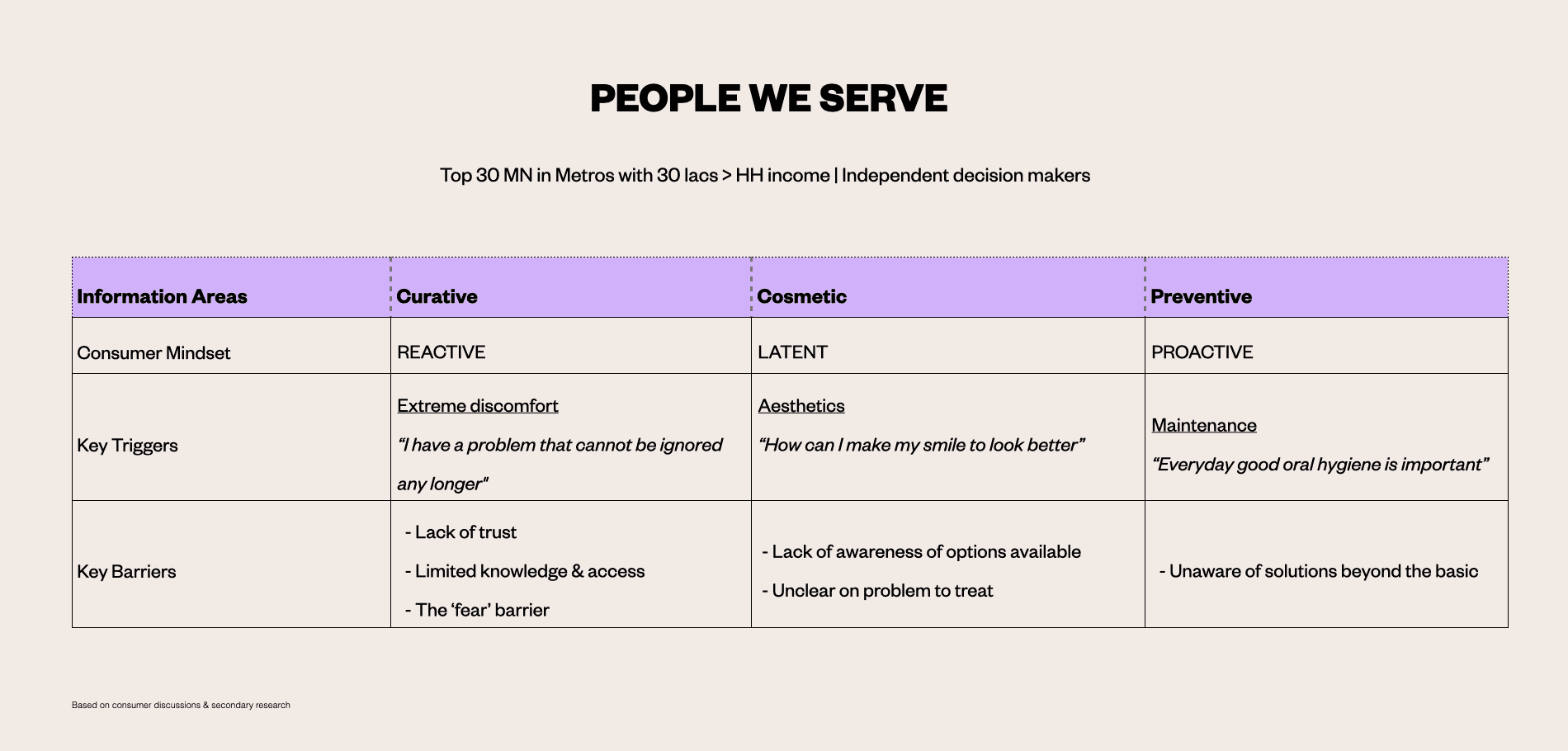
Dezy had already done some foundational work to define its 3 user segments:
Curative: This represented users who were in some sort of pain and urgency.
Cosmetic: These users may not be in pain but wanted to correct their teeth for a better smile. They were primarily driven by insecurity or an upcoming event, for example.
Proactive: This represented the minority of users for whom dental care was a routine.
Dezy had already done some foundational work to define its 3 user segments:
Curative: This represented users who were in some sort of pain and urgency.
Cosmetic: These users may not be in pain but wanted to correct their teeth for a better smile. They were primarily driven by insecurity or an upcoming event, for example.
Proactive: This represented the minority of users for whom dental care was a routine.
Scoping
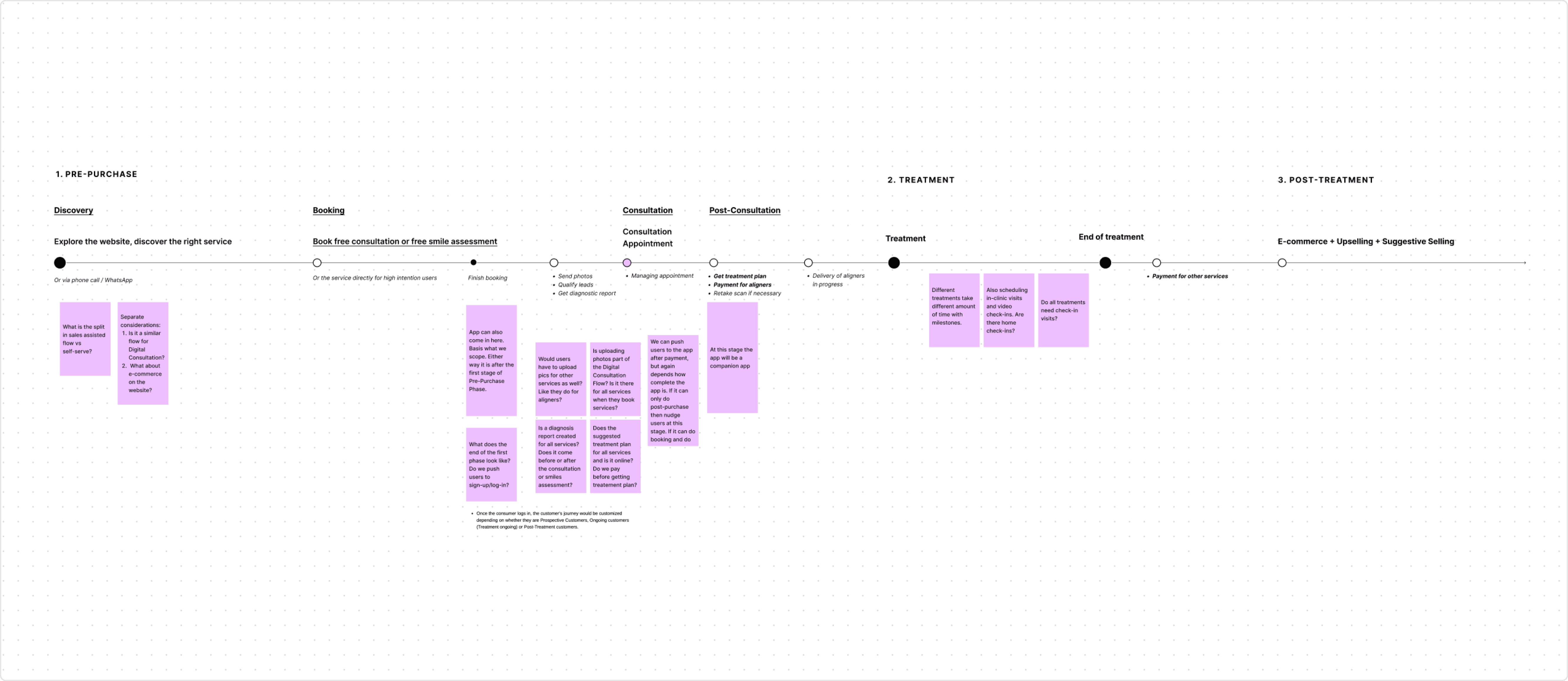
At the end of these talks, I documented the current user-journey to help all teams align on the scope of the project, and help our team decide how to plan and break down different modules.
At the end of these talks, I documented the current user-journey to help all teams align on the scope of the project, and help our team decide how to plan and break down different modules.
Speaking to users
To supplement this general understanding, I along with my PM, conducted 7 remote user interviews with users who had dropped-off at some stage during the Booking Flow. Our goal was to understand the different reasons for users dropping-off.
To supplement this general understanding, I along with my PM, conducted 7 remote user interviews with users who had dropped-off at some stage during the Booking Flow. Our goal was to understand the different reasons for users dropping-off.
What We Learnt
The perception of ALL users was consistent with Dezy’s prior user research. These words were used to describe the thought of going to the dentist’s: Insecurity, Fear, Nervousness, Hard to Trust, Unsure.
Some users directly booked a consultation without going through any of the treatment pages as they are already aware of the treatment they wanted and had done their prior research on Google and other dental health websites.
All the subjects that we interviewed, reported ‘Pricing’ as the primary and determinant variable for their decision to either not proceed further or avail the services in the future.
This might change for a separate audience, but broadly in India price-sensitivity is the norm and dental care is an already high-ticket purchase.
Documenting Design Principles
Dezy is also a strong founder-led company, so we spent some time with the co-founders to understand the company vision and discuss their company values. The idea was to derive design principles to shape our UX strategy and provide a cohesive rationale for any downstream design decisions.
DEZY DESIGN PRINCIPLES
AUTHENTIC
Trying to make dental care more accessible and understandable.
CANDID
Straight talk with consumers, absolute honesty and clarity, no false promises.
EXPERTISE-LED
Even though we want to seem approachable, that does not mean that we do not have the competency or credibility to lead dental care in India.
APPROACHABLE
Dental care is already intimidating. Dezy should not feel this way, nor be too fancy or technical.
EXTENDING THE PERSONAS
Some post-discovery insights
I. After spending a month and a half in discovery, I added another layer to the already defined three user segments. This was partly driven by our conversations with Dezy’s users, but also by my prior design work in DTC / E-commerce.
A Problem-Aware User: This includes users who are aware of what dental problem or issue they have, but may not know what treatment to book and need help finding the right treatment.
A Treatment Aware User: This includes users who have a good idea of what treatment to book, and can have a good idea of what dental problem they have as well. These users have some clarity and may just need to quickly book a consultation for that treatment.
II. On top of this, after looking at Dezy’s Keywords Report, I saw that potential Treatment-Aware users had a search distribution that had a long-tail. Most online searches were for a handful of treatments such as aligners, braces and implants. The remaining > 90% of treatments that Dezy provided showed up in very few keywords, if at all.

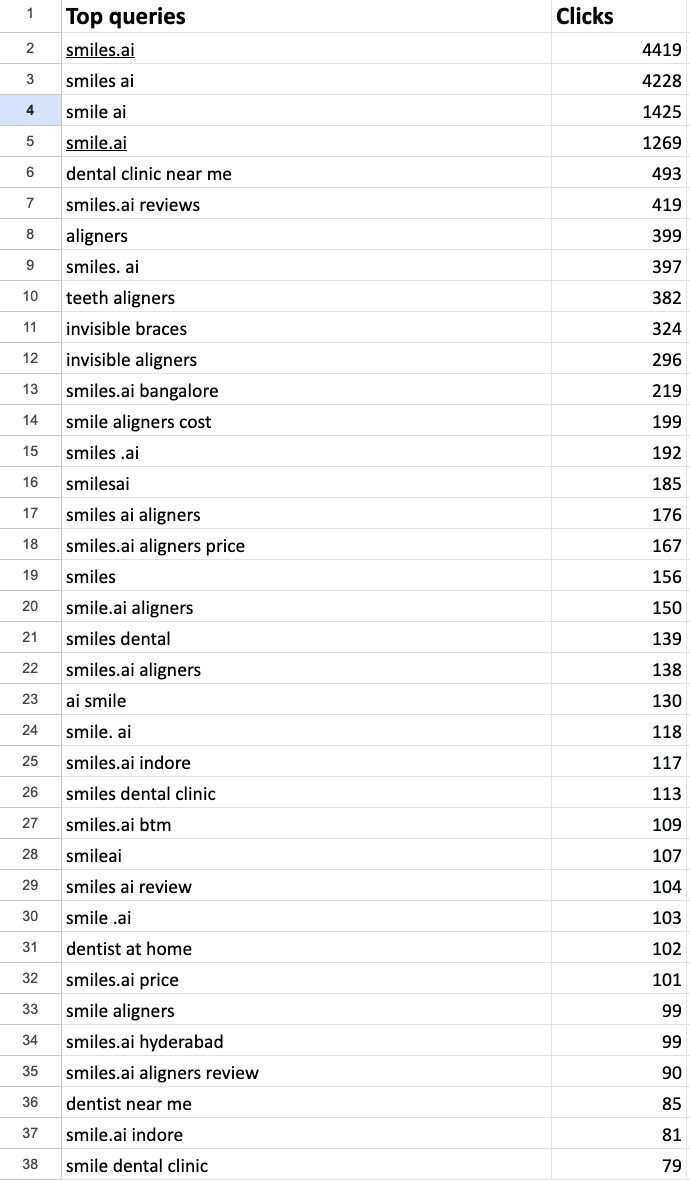
This served us a proxy to conclude that most Treatment-Aware users would already be aware of only a handful of treatments. Therefore, for most of the issues that Dezy serviced, we had to design with Problem-Aware users in mind.
GOALS
Fleshing out the goals
Fleshing out the goals
Even though the main problem was still fixing the leaky funnel, we felt that there was a bigger opportunity to re-design the Booking Flow from the ground up by aligning it with the findings and insights we uncovered.
These were our high-level goals:
Increase Booking Conversion Rate %
Increase Self-Serve %
Reduce user anxiety
Improve usability of the whole flow, remove complexity and overlaps
Even though the main problem was still fixing the leaky funnel, we felt that there was a bigger opportunity to re-design the Booking Flow from the ground up by aligning it with the findings and insights we uncovered.
These were our high-level goals:
Increase Booking Conversion Rate %
Increase Self-Serve %
Reduce user anxiety
Improve usability of the whole flow, remove complexity and overlaps
Clove Dental
Sabka Dentist
Apollo Dental
Looking at the incumbents and other benchmarks
Looking at the incumbents and other benchmarks
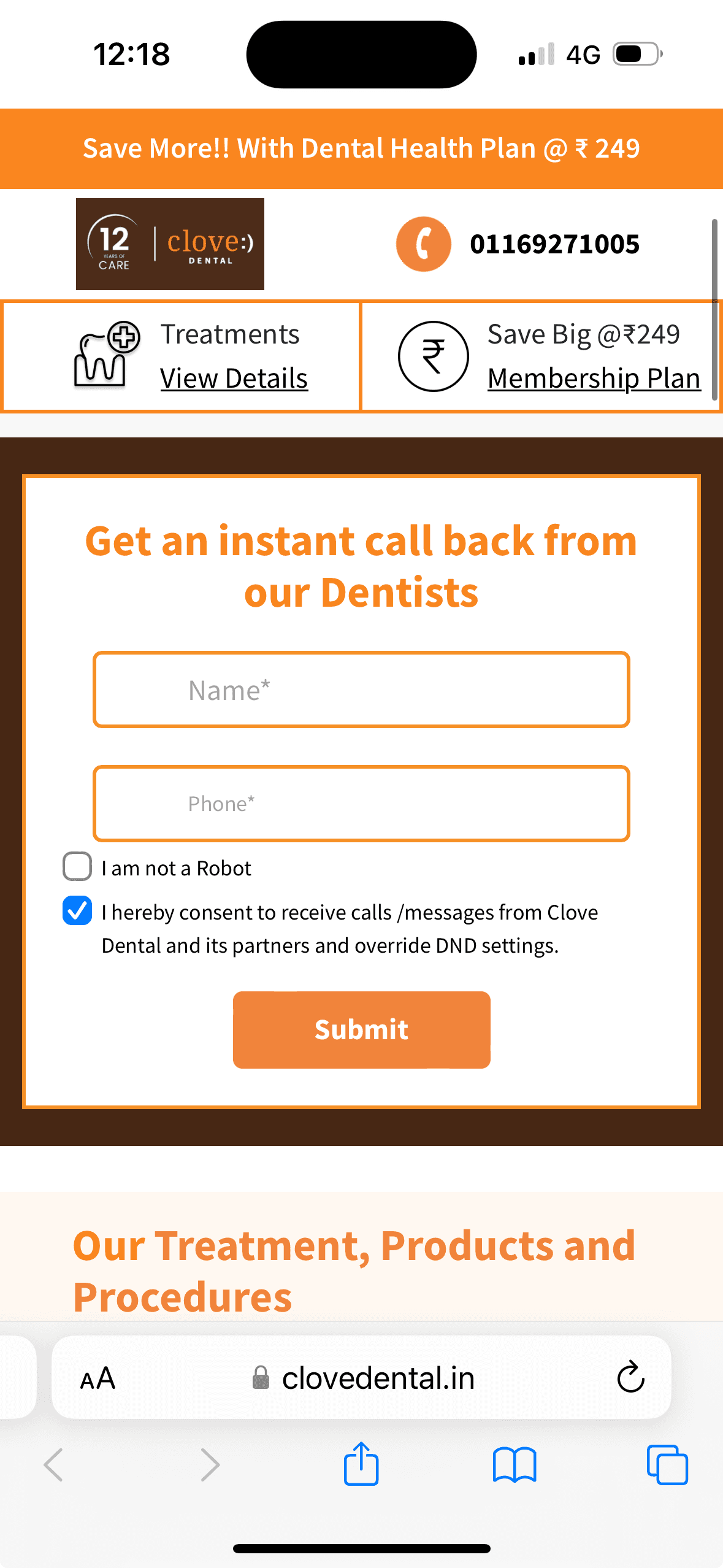
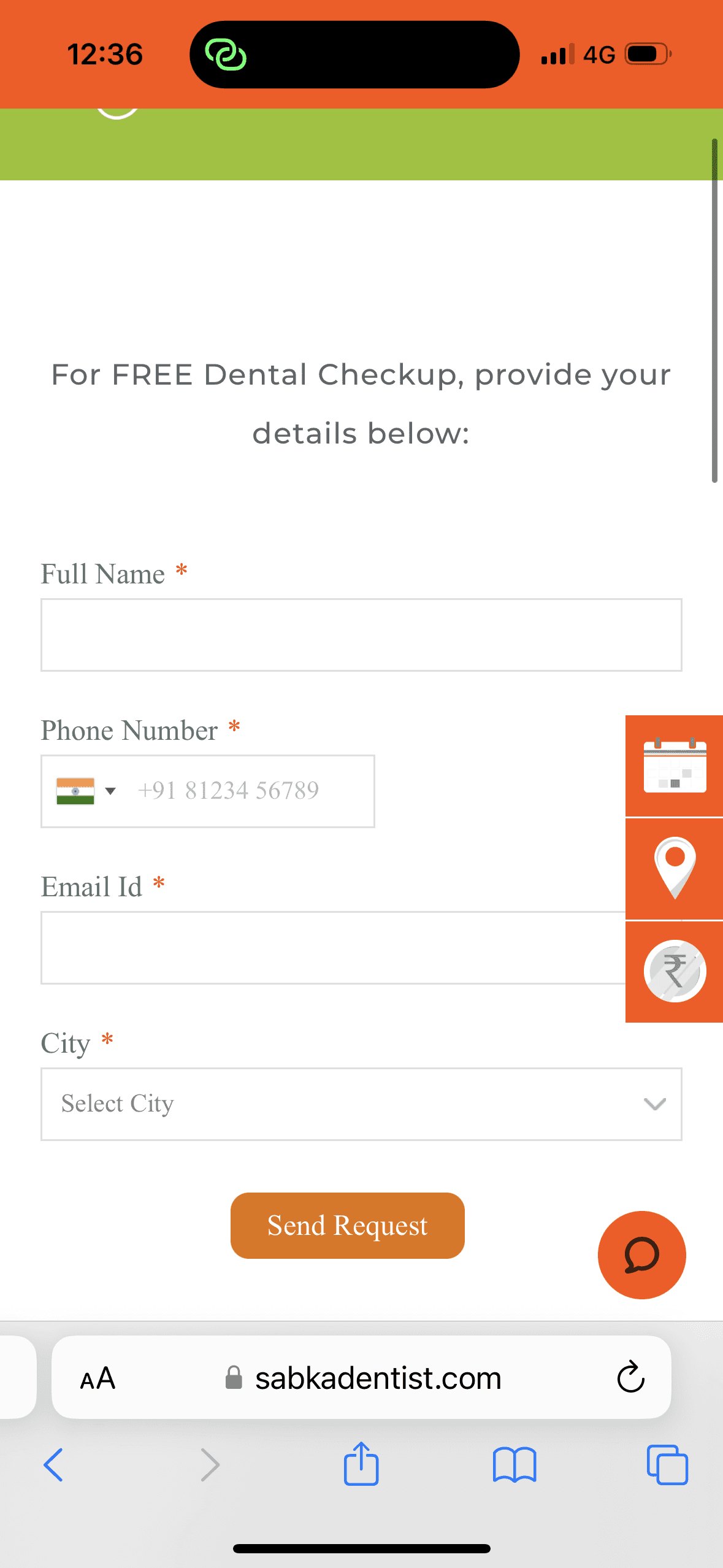
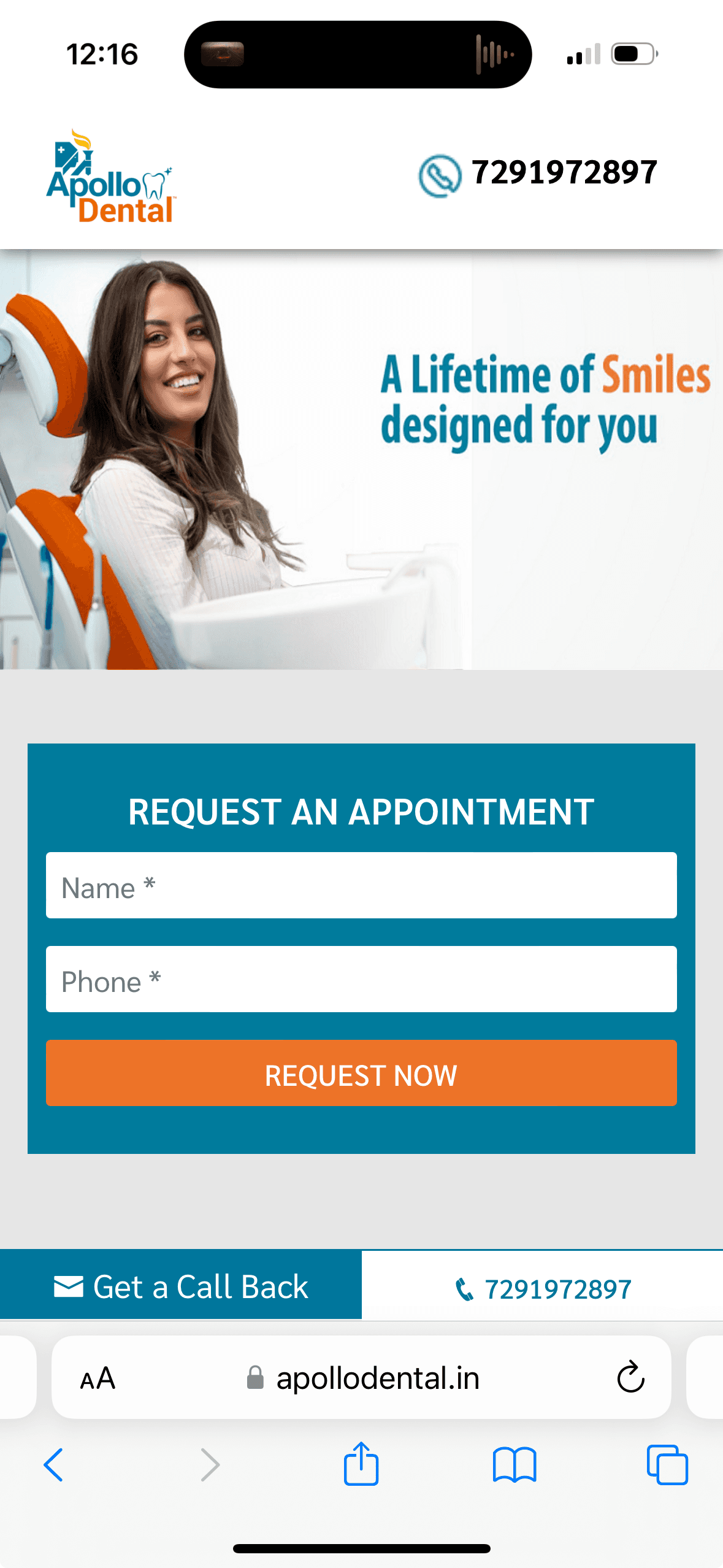
I started by looking at how the big full-stack dental care chains handled their new user acquisition funnels:
I started by looking at how the big full-stack dental care chains handled their new user acquisition funnels:
Clove Dental
Sabka Dentist
Apollo Dental
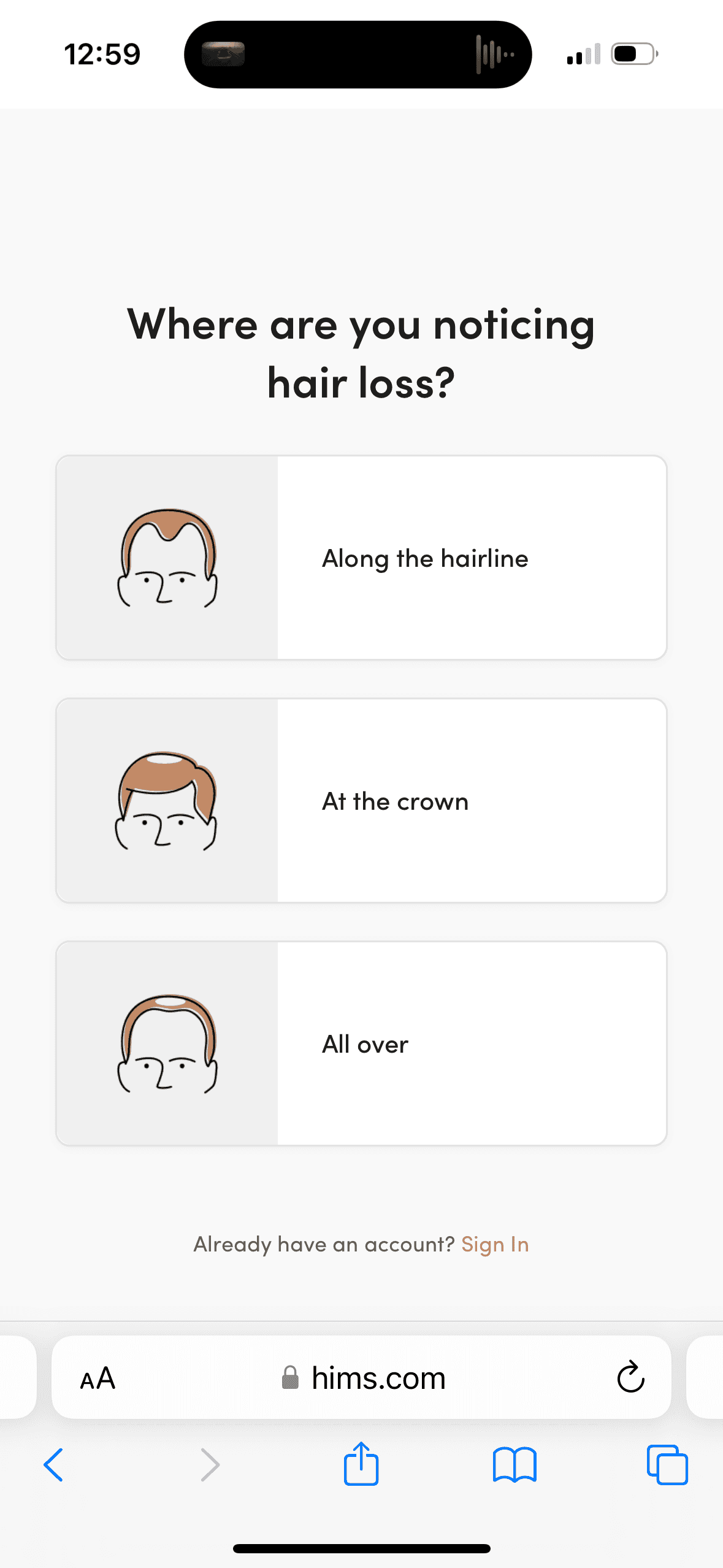
I also benchmarked other ‘high-trust threshold’ experiences in healthcare, dental care, and insure-tech that still managed to feel approachable, easy-to-start, and not overwhelming. A lot of our references we found were informed by the principles we documented early on. These are a few of those references:
I also benchmarked other ‘high-trust threshold’ experiences in healthcare, dental care, and insure-tech that still managed to feel approachable, easy-to-start, and not overwhelming. A lot of our references we found were informed by the principles we documented early on. These are a few of those references:
For Hims
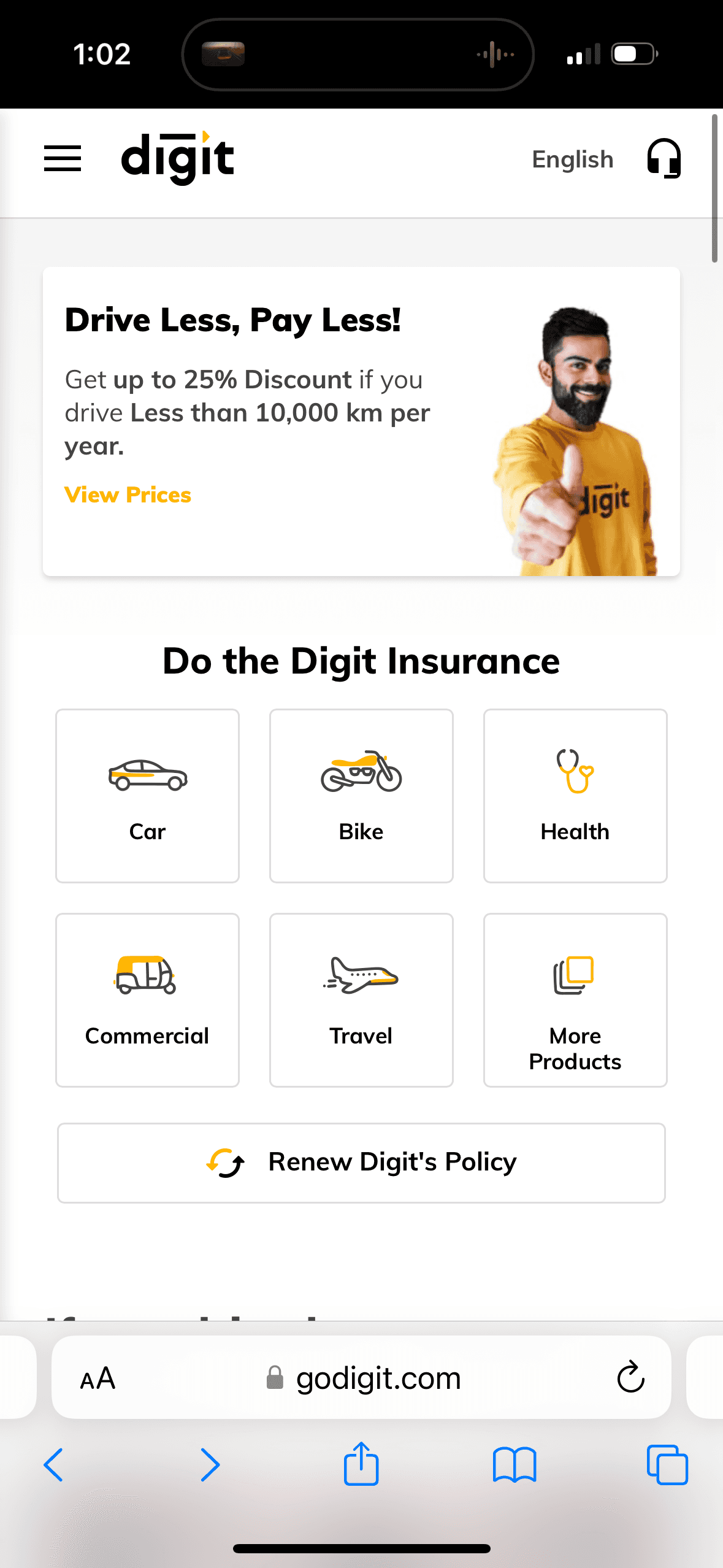
Digit
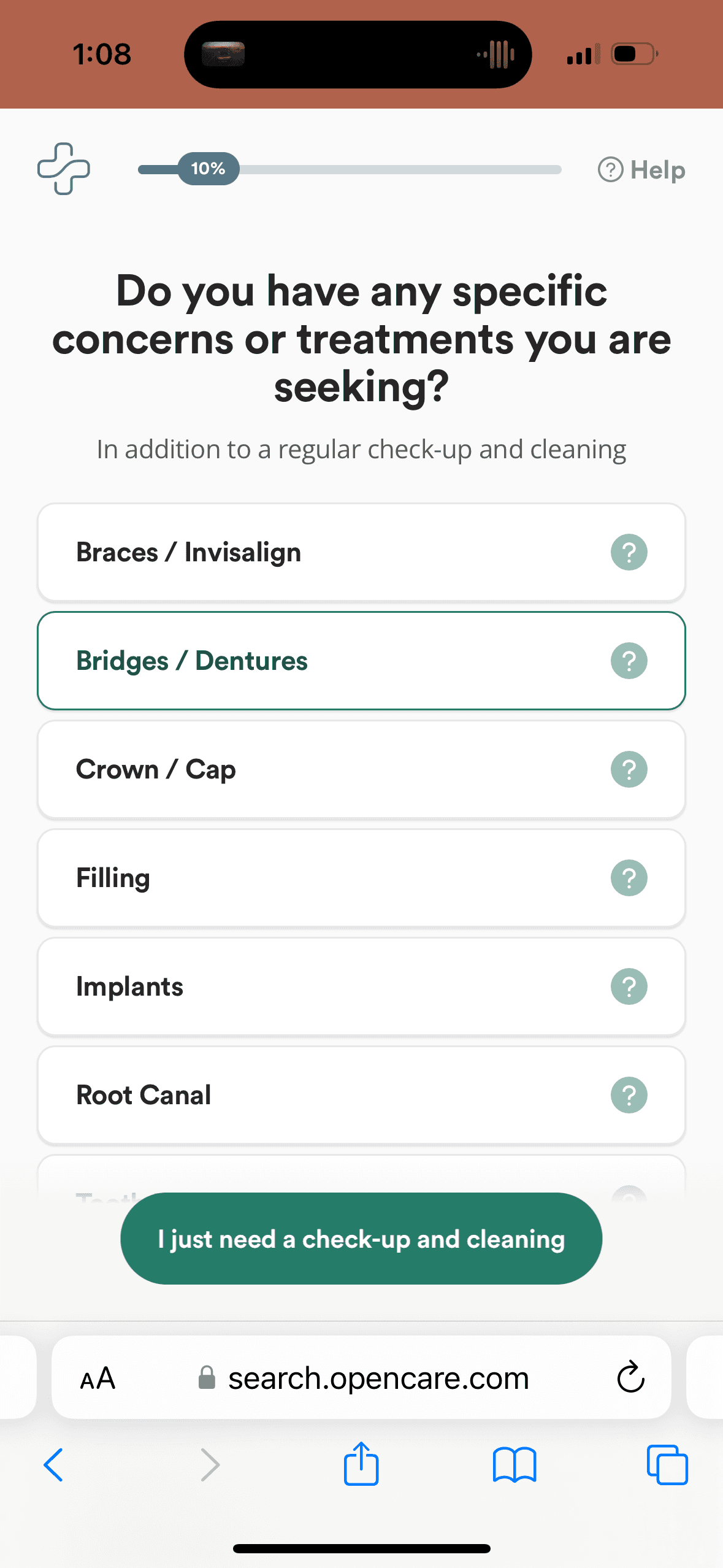
Opencare
For Hims
Digit
Opencare
The Re-designed Booking Flow
The Re-designed Booking Flow
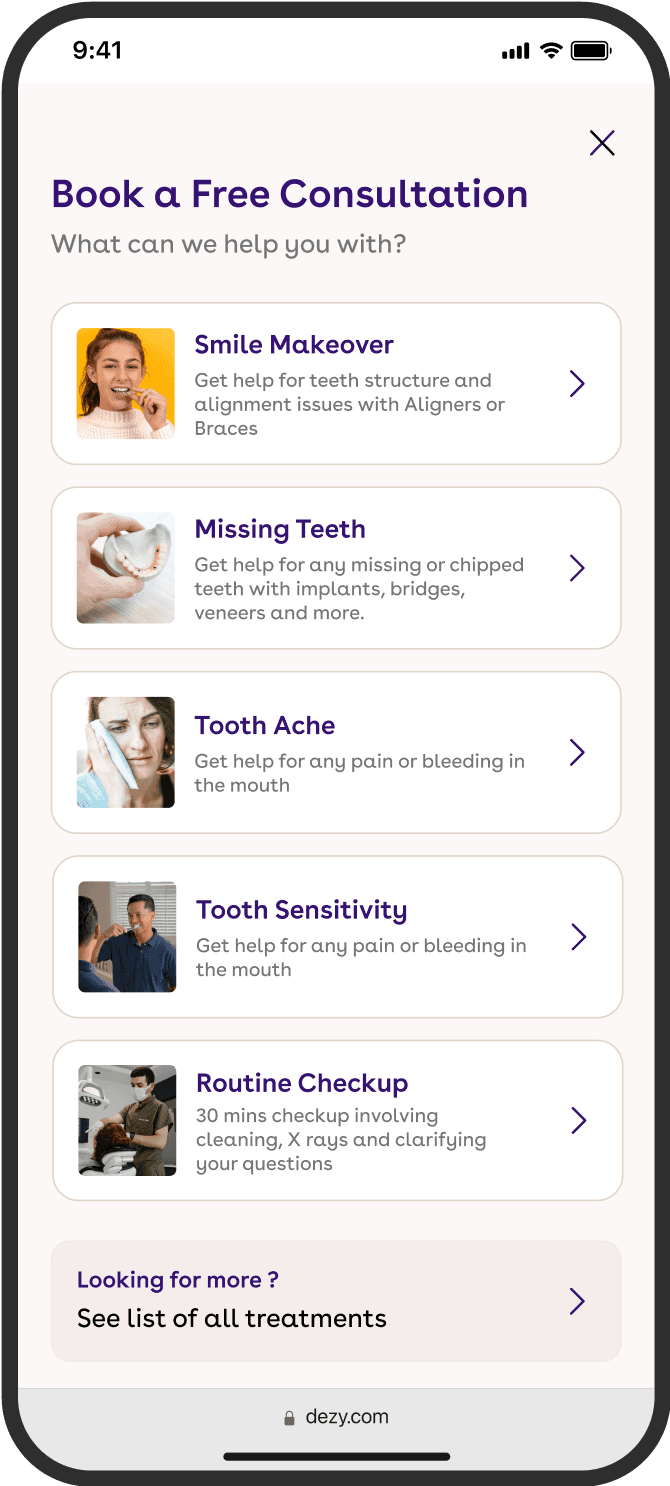
Instead of the Booking Flow serving as a funnel to just book a free consultation, we wanted to reframe it to feel like the start of a consultation - users weren't booking a free consultation, they had already started one.
Instead of the Booking Flow serving as a funnel to just book a free consultation, we wanted to reframe it to feel like the start of a consultation - users weren't booking a free consultation, they had already started one.
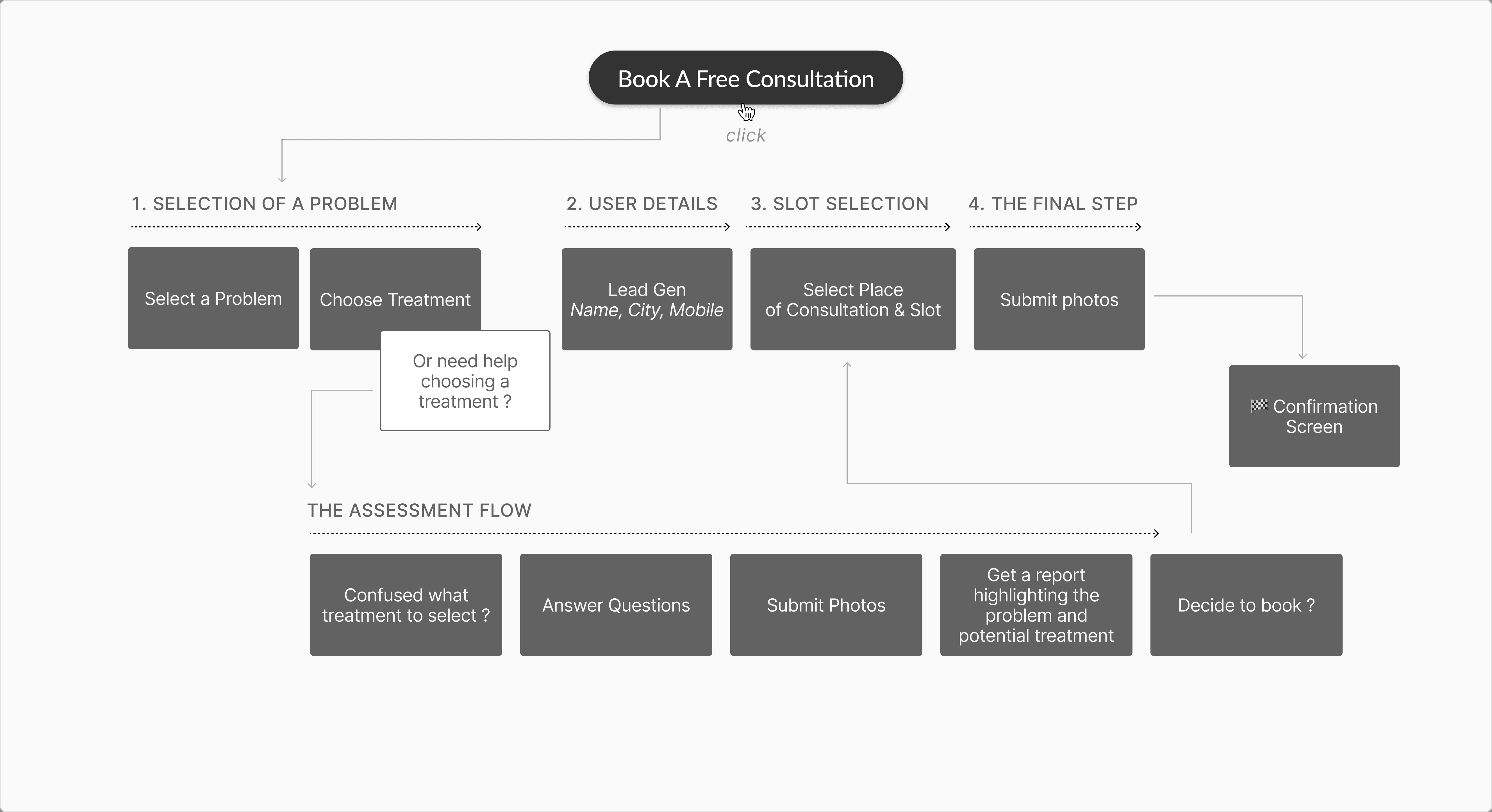
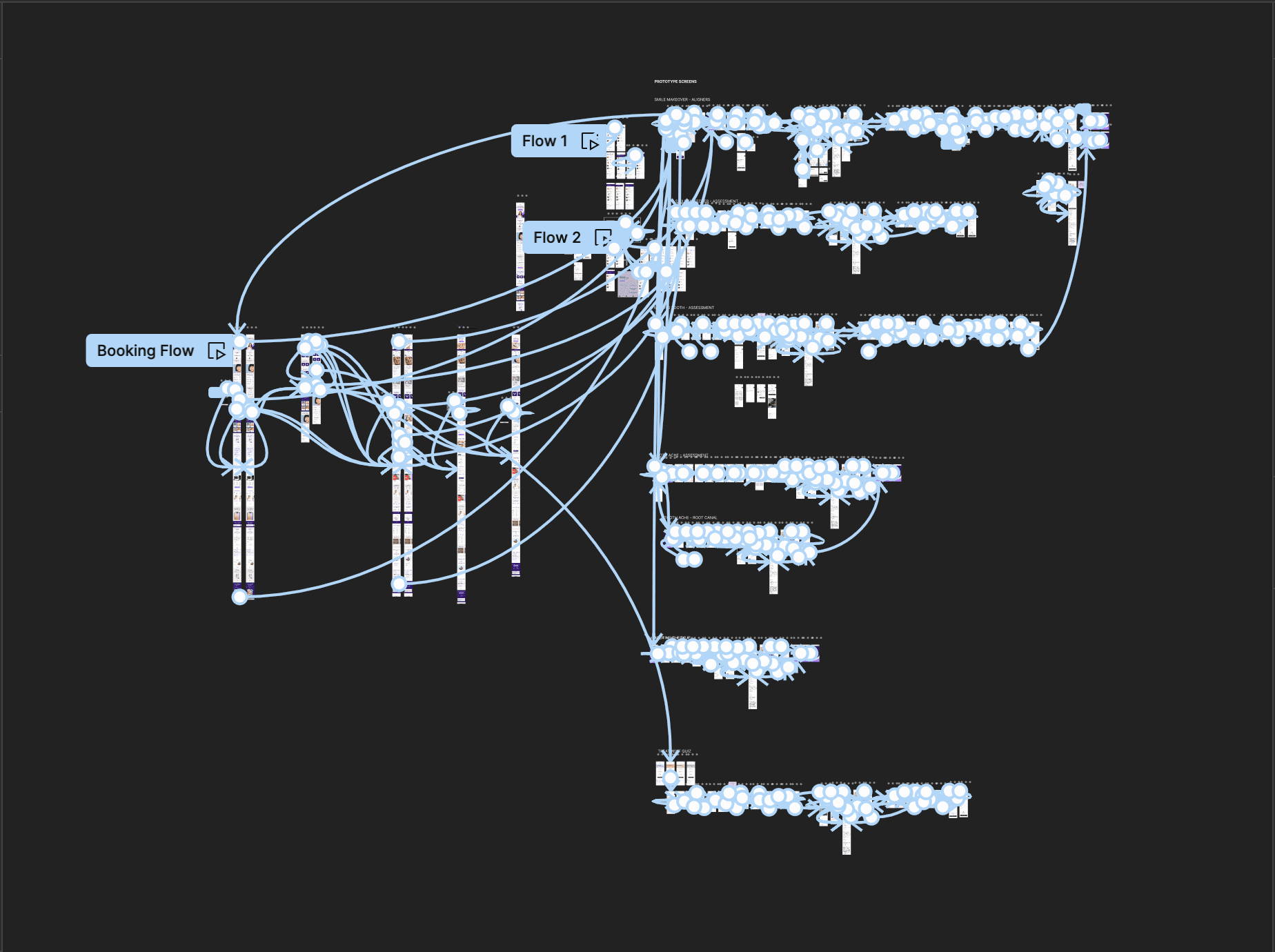
I prototyped the interaction and worked closely with the Dezy team to internally test different permutations of the flow.
I prototyped the interaction and worked closely with the Dezy team to internally test different permutations of the flow.
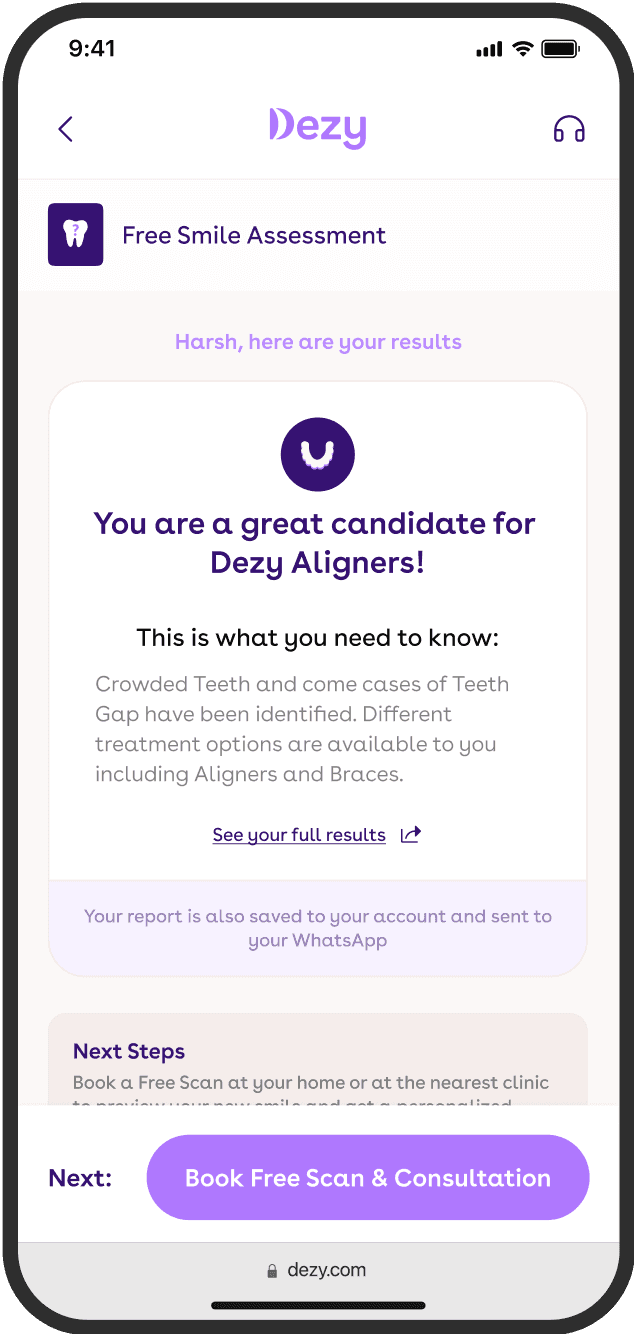
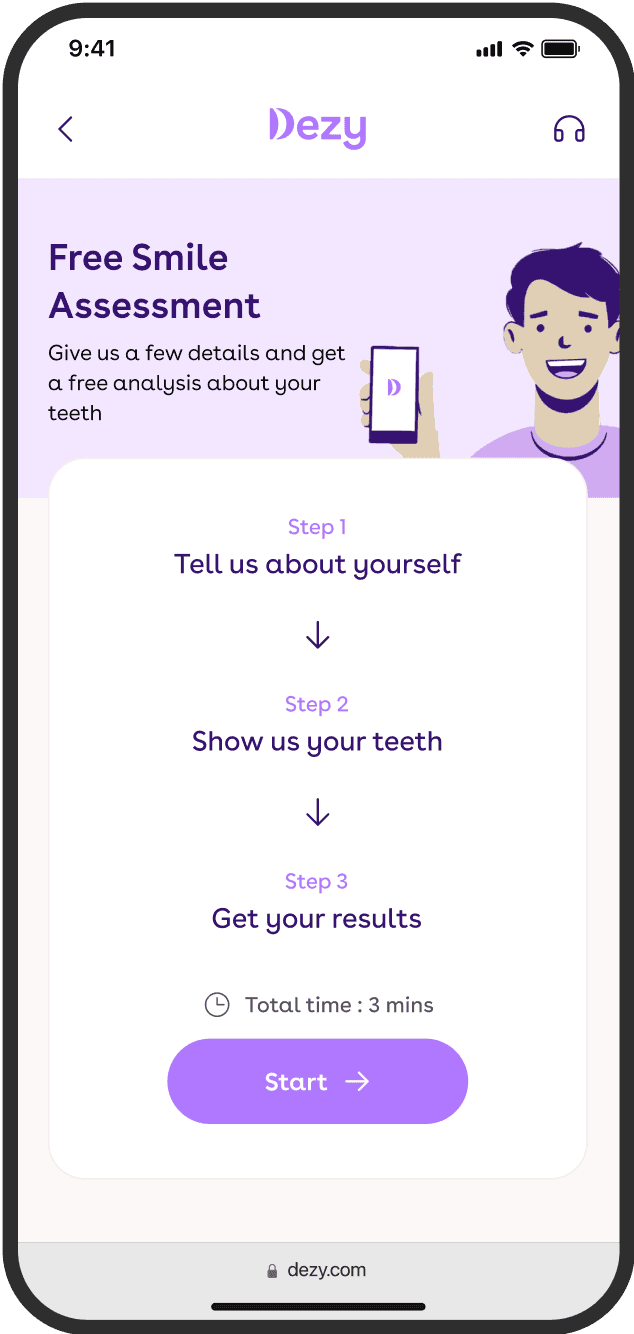
By the end of all my wireframing and prototyping, our visual designer, Dhruv had arrived at the new visual language for Dezy, in line with its re-brand. I worked closely with him on the final screens, adding a bit of polish. This was how some of the final screens turned out:
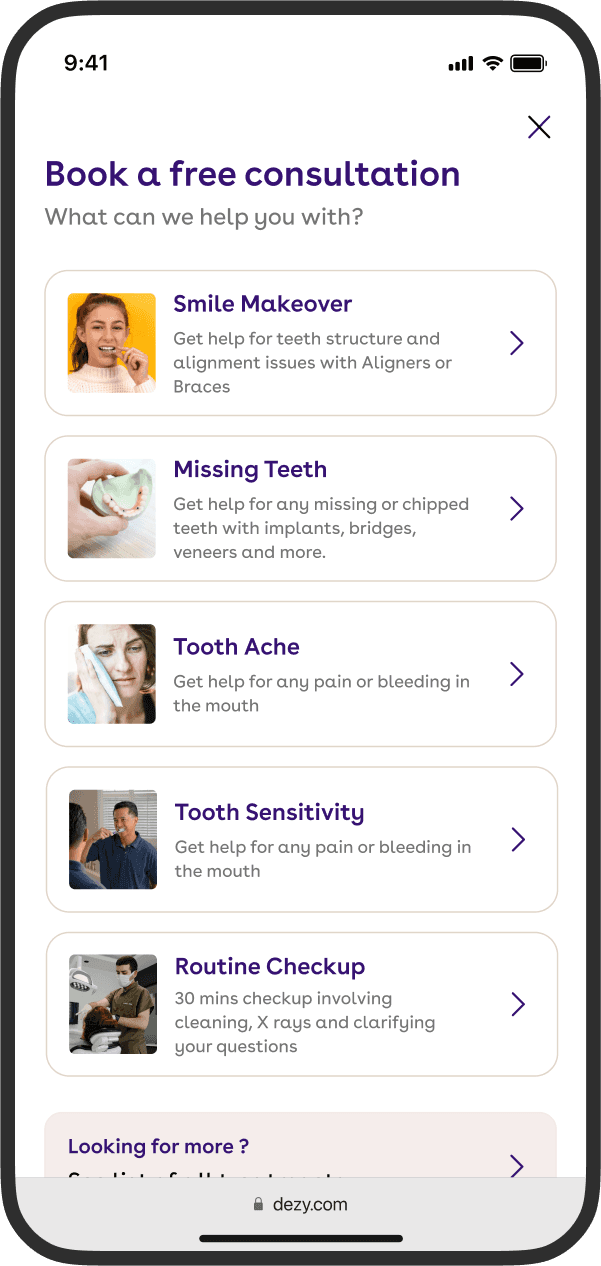
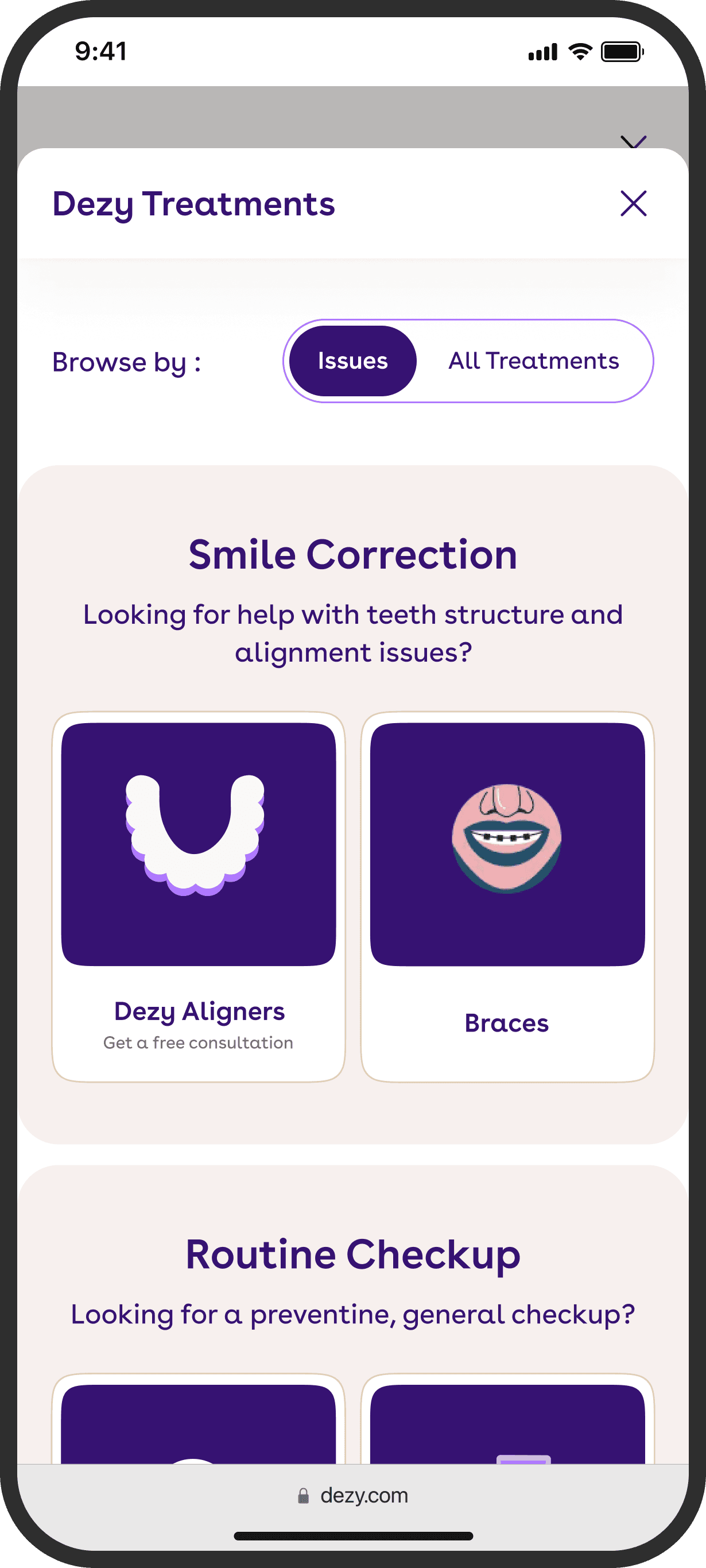
Selection Of A Dental Issue
Users would enter this flow from the home page, after which they would select a problem first. We had managed to map most treatments to a few problems. The goal was to not present too many choices up front and create an overload. Also, I managed to consider Treatment-Aware users here by designing a bottomsheet to browse all treatments without leaving the flow.
Selection Of A Dental Issue
Users would enter this flow from the home page, after which they would select a problem first. We had managed to map most treatments to a few problems. The goal was to not present too many choices up front and create an overload. Also, I managed to consider Treatment-Aware users here by designing a bottomsheet to browse all treatments without leaving the flow.
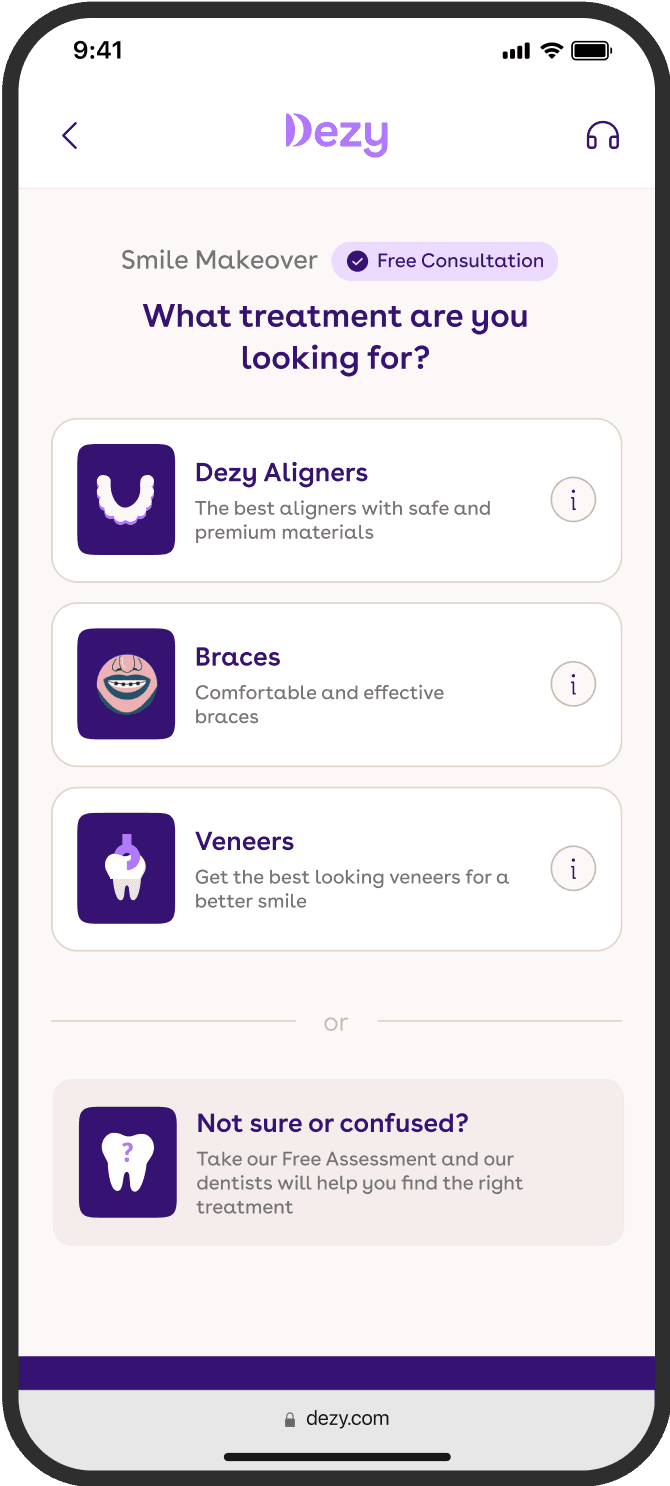
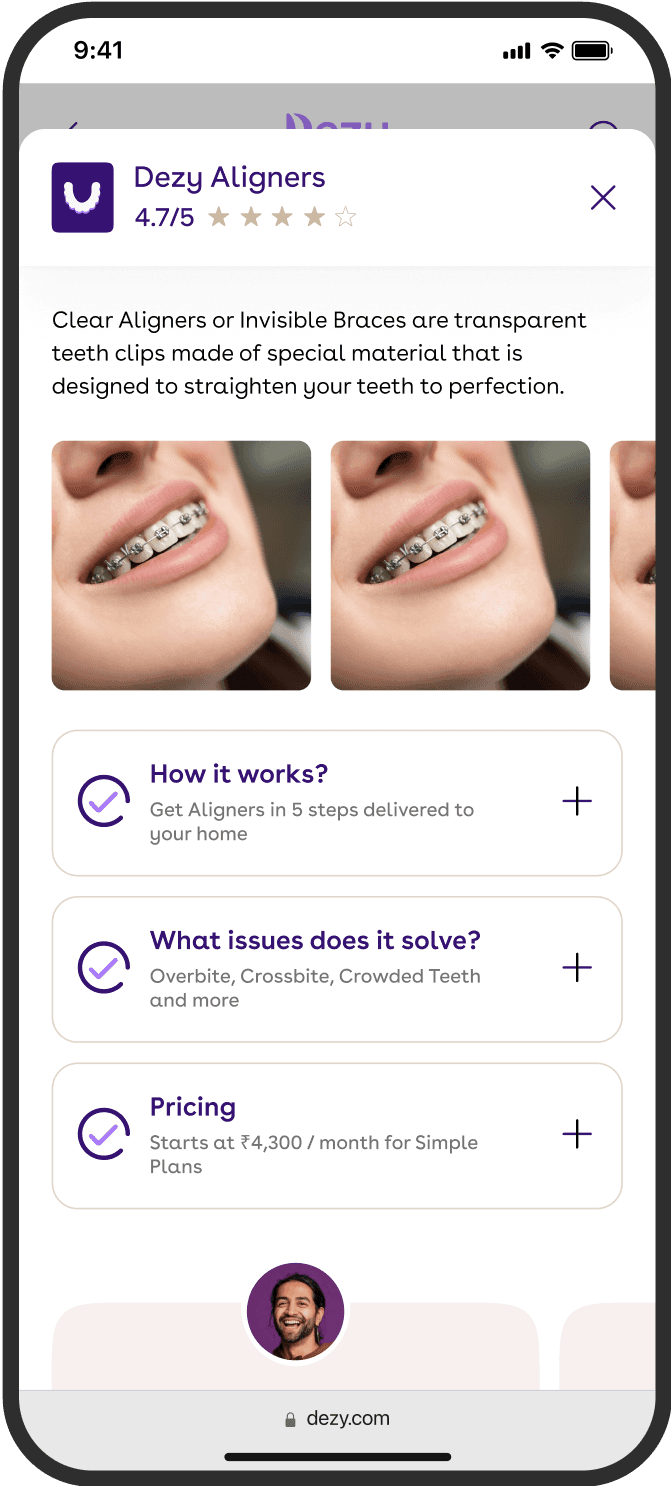
After selecting a problem, users could get a summary of each treatment’s most salient points, available at a quick glance on tapping the information icon. This gave users necessary context about specific treatments and allowed for quicker recall for those who had dropped off but decided to return.
After selecting a problem, users could get a summary of each treatment’s most salient points, available at a quick glance on tapping the information icon. This gave users necessary context about specific treatments and allowed for quicker recall for those who had dropped off but decided to return.
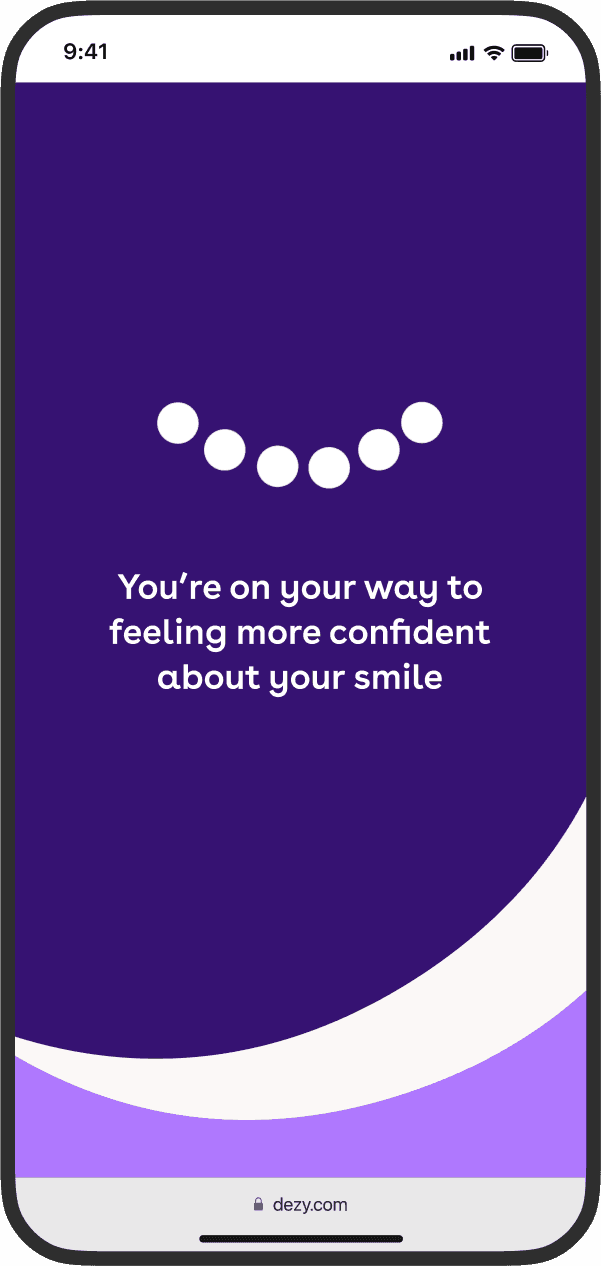
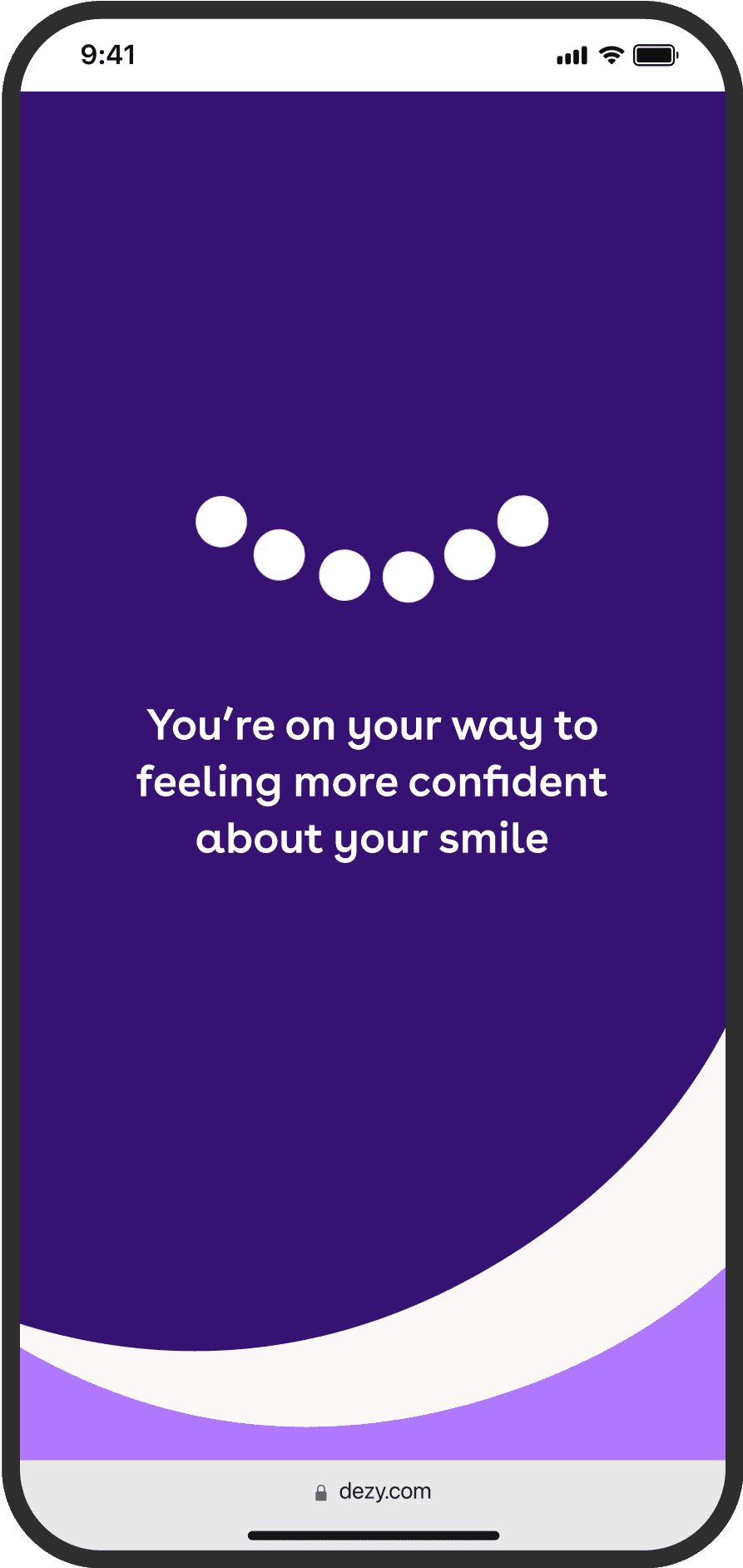
We also designed a transition screen after users selected a choice to ease users into the booking phase. These transition screens would feature a micro-animation, specific to the problem chosen, using simple circles to represent teeth.
We also designed a transition screen after users selected a choice to ease users into the booking phase. These transition screens would feature a micro-animation, specific to the problem chosen, using simple circles to represent teeth.
Slot Selection
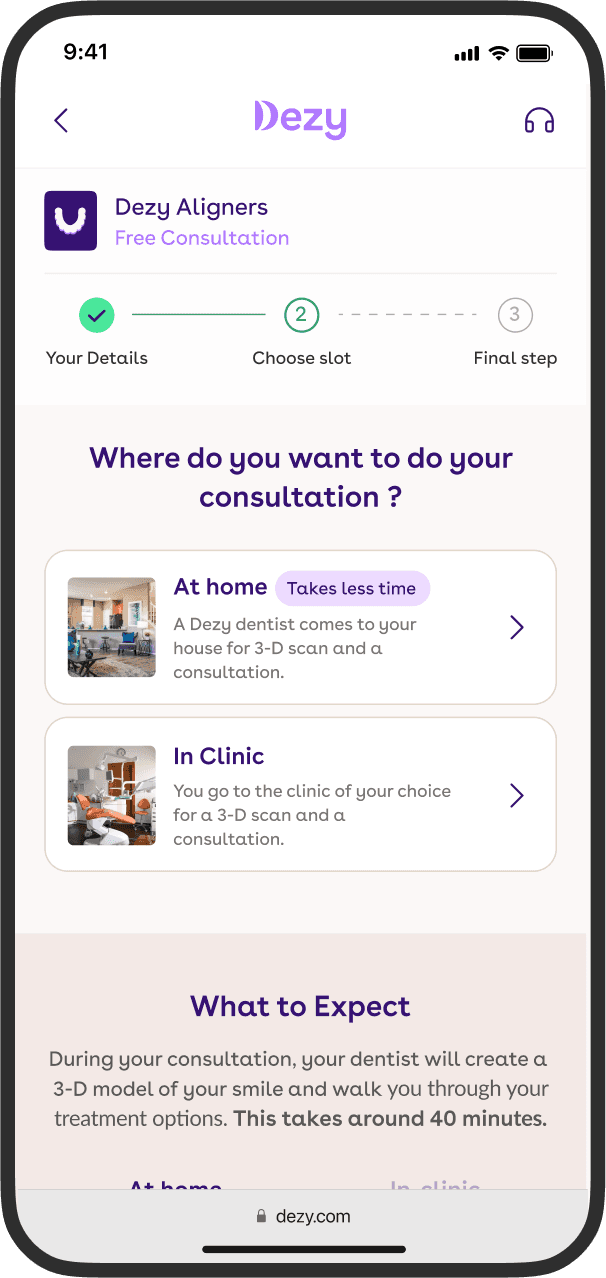
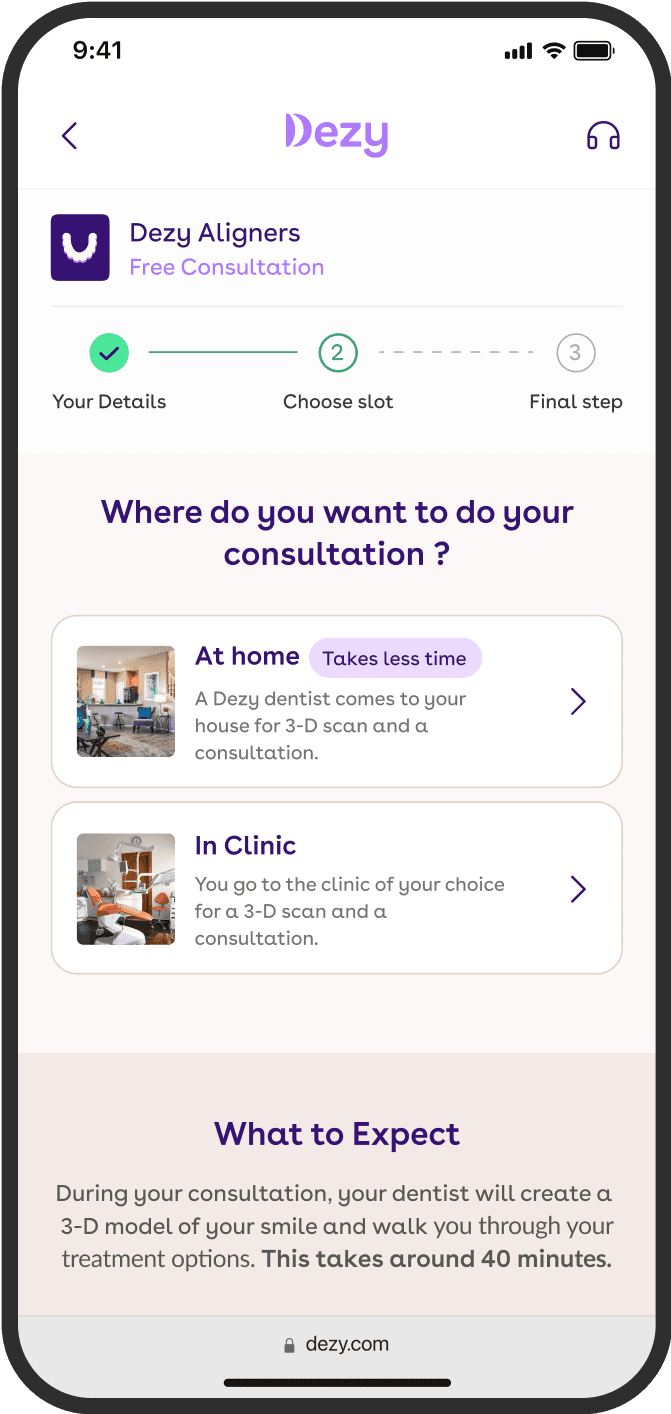
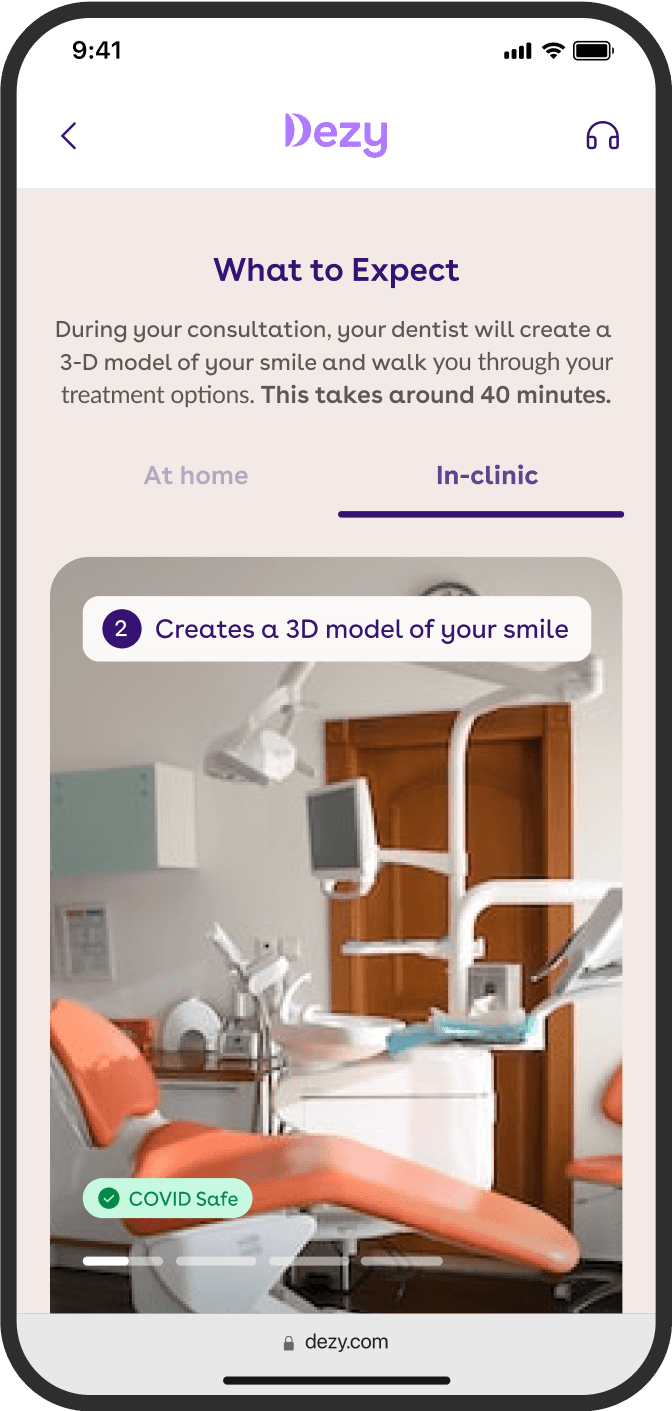
After users added their details, they could select the place of consultation. To better help users decide between the two choices, I added a section called “What to Expect” which would take users through a carousel that shows the steps involved along with a FAQs section. The idea was to appease any anxiety or address possible objections within the flow itself.
Slot Selection
After users added their details, they could select the place of consultation. To better help users decide between the two choices, I added a section called “What to Expect” which would take users through a carousel that shows the steps involved along with a FAQs section. The idea was to appease any anxiety or address possible objections within the flow itself.
Adding Some Friction
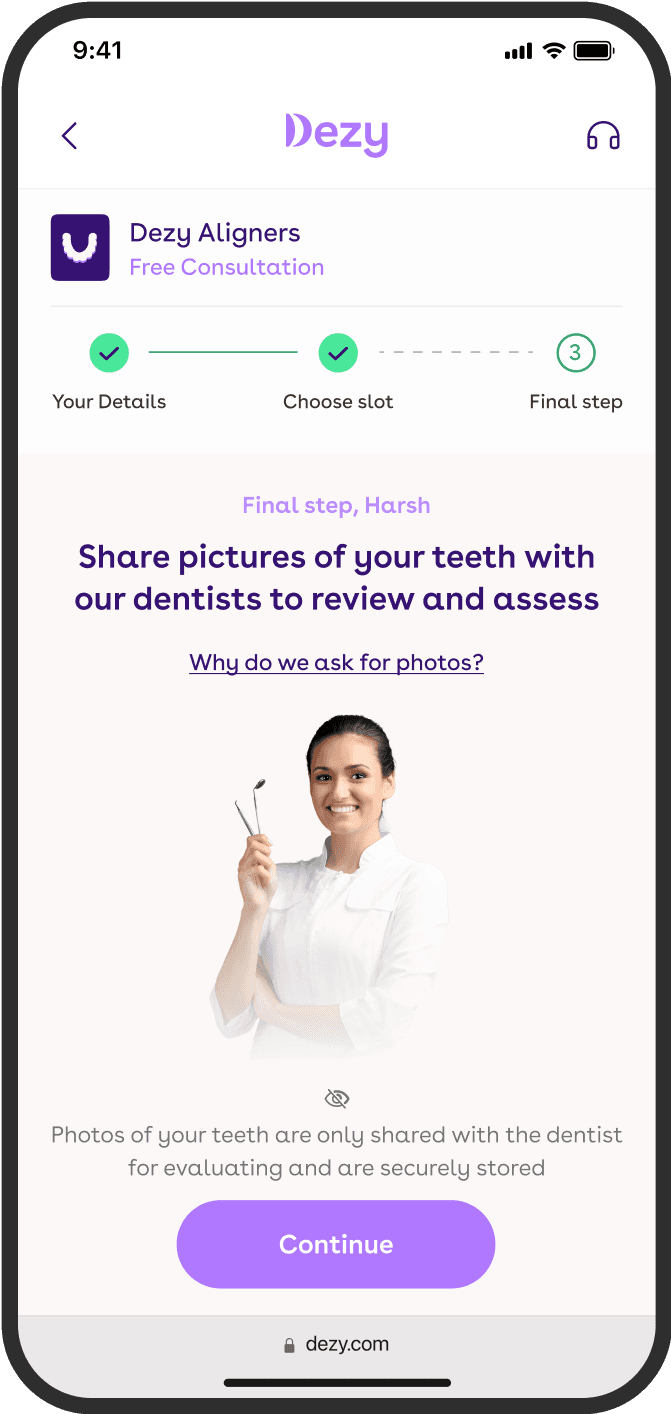
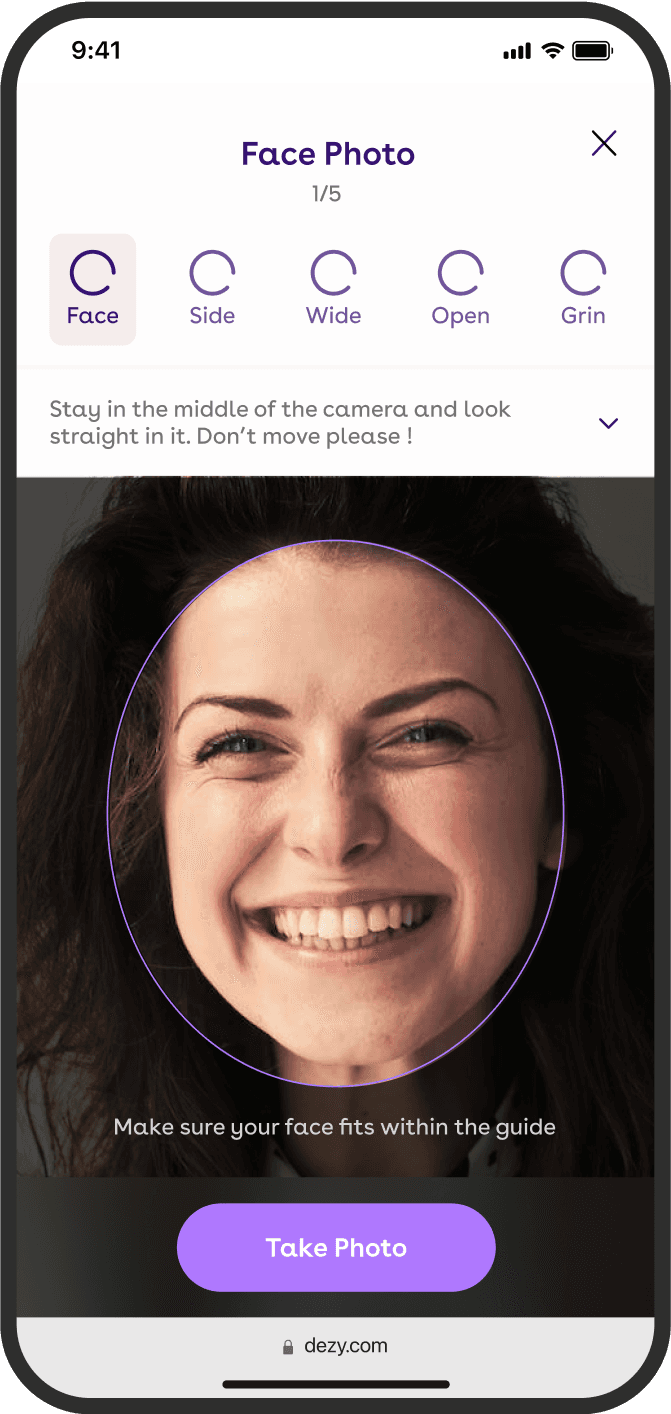
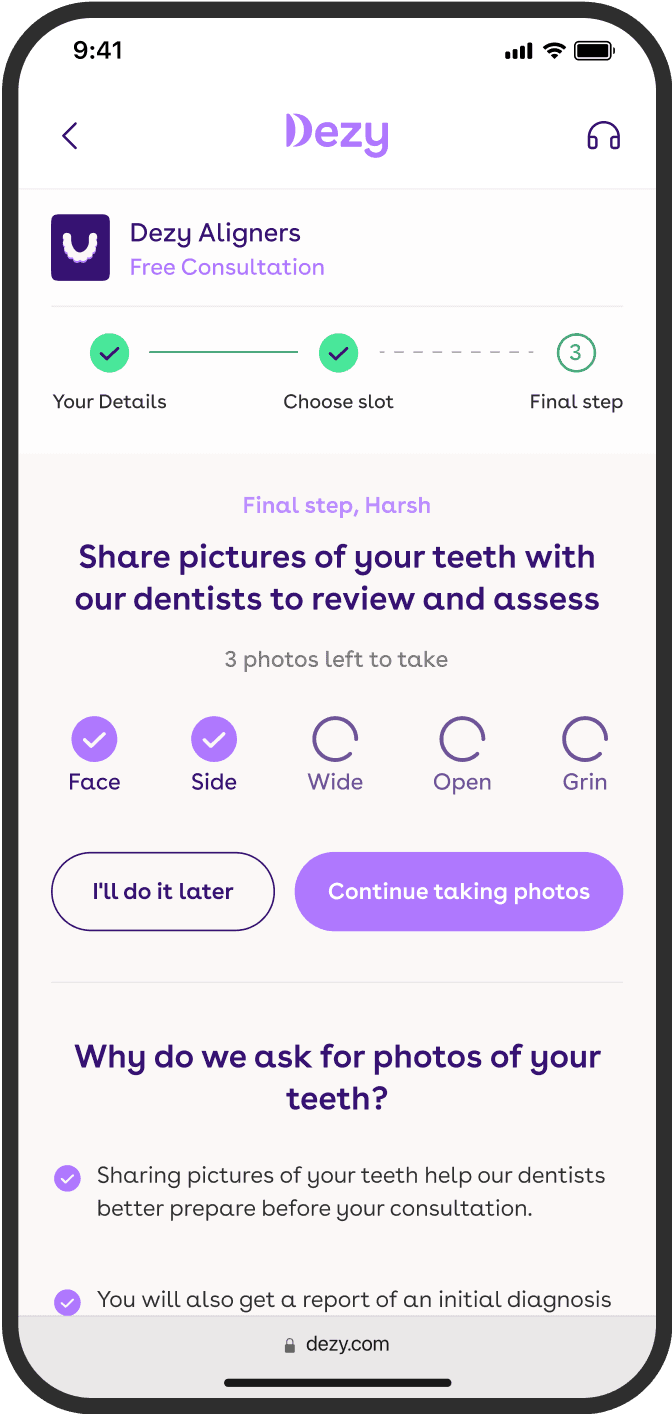
Counterintuitively, to add some friction and gauge intent, some treatment flows would ask for user photos. But asking users to submit photos, no matter how willing to undergo treatment they are, is always tricky. Transparency was key here. I wanted to communicate exactly why we were asking for photos and how it was actually in the user’s benefit to provide it to to us. I used a bottomsheet again to provide these additional details.
Adding Some Friction
Counterintuitively, to add some friction and gauge intent, some treatment flows would ask for user photos. But asking users to submit photos, no matter how willing to undergo treatment they are, is always tricky. Transparency was key here. I wanted to communicate exactly why we were asking for photos and how it was actually in the user’s benefit to provide it to to us. I used a bottomsheet again to provide these additional details.
Credits
Credits
The team that worked with me on this project
The team that worked with me on this project
Second UX Designer
Second UX Designer
SUSHRUT MANGESHIKAR
SUSHRUT MANGESHIKAR
Visual Designer
Visual Designer
DHRUV SUDEEP
DHRUV SUDEEP
Product Manager
Product Manager
ANUDEEP BORUSU
ANUDEEP BORUSU
And also,
hitesh, Tom, amitto, jenny & the rest of the Dezy Team
This case study is due for an update. Go back to personal website.
This case study is due for a visual update.